


Blog
Behind the scenes at Down to Business Live
 5.15 pm: Two hours to go. Arrive at the set at the Coutts main office on the Strand, and I'm standing in what appears to be a displaced semi-tropical moist rainforest. But this foliage, sprouting within a 50 metre radius of Ryman's office and paper supply store on the Strand, isn't half as displaced as the people who are about to arrive; a set of Paraguayan, Indian, Scottish and Danish social entrepreneurs about to pitch their ideas in one of the UK's most traditional private banks. Welcome to Down to Business. I've got no idea how this is going to go.
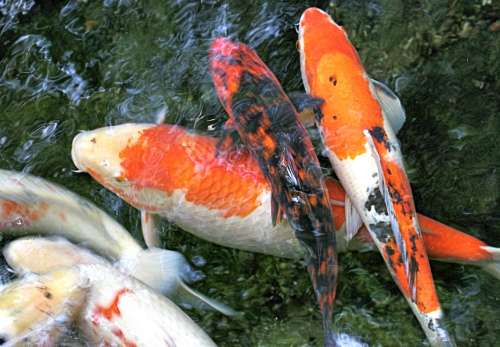
5.20 pm: Meet Rob, Ollie and Gus, all part of the superb One Planet Pictures team, to check out the layout. In the centre of the room giant primeval-looking orange Koi Carp loll nonchalantly in a pond. The fish themselves have a high net worth feel to them. You can imagine them chomping their lips around a Cohiba cigar. Around the carp there is chaos. It will be a miracle if they get this set up in time. I turn around and the set walls are up. There's no turning back. This event is happening. I head towards the green room for some calm before the storm. It's time to sit down and go through my lines.
Mads' shoes I remember from Copenhagen. Two-tone cream and brown patent leather. A staple of Mid-Western bowling alleys circa 1950. As defiant of fashion as his crowd-sourcing investment platform is disruptive to finance. Maybe more so. His eyes are gleaming.
Next to him is Paraguay's Martin Burt, founder of the Escuela Agricola, a self-sustaining school in Paraguay's rural Chaco. It was Burt who, as Mayor of Asuncion after the fall of the dictator Alfredo Stroessner, got the news that the army was going into the capital to put down some riots. Burt had another approach to conflict resolution, and brought in the municipal garbage trucks to block out the tanks.
It's Puneet Rustagi who is the unknown quantity. The new head of strategy and business development for Husk Power Systems in Bihar. He is fiercely bright, that I know. Ex IFC, he is the guy who came up with the franchise strategy for Husk that looks set to take them from 80 plants to 2000 over the next 3 years. But he did more slow nodding than talking in Bihar, in the presence of Husk's founder Gyanesh Pandey. Is he going to be daunted? "Leo", he says hesitantly. I ready myself for supportive words, "your shoelace is undone."
As I am down on the ground adjusting this situation, Dave Osborne, there with Keith Wight from Jompy, poses another question. "So where do you think we should set up the gas cylinder for the Jompy demonstration?" I am not a health and safety expert, but this doesn't sound like it's in the script.
6.00 pm: 30 minutes early, the first audience members start to take their seats. And something sideswipes me. There's a problem. There's two ways this show can fail. And we have got to choose one of them.
We can fail the entrepreneurs, with the panel dissecting their innovative and early-stage businesses in front of a possible global audience of 300 million TV screens. We can be a giant exercise in hope-crushing. Or we can fail the audience, the TV audience of 300 million globally, plus the now milling live crowd of 150, by giving a set of feel-good platitudes and commendations for effort. So what's the approach? What's the final guidance for the panel? Are the gloves on or off?
6.30 pm: Panel briefing. The answer becomes rapidly clear. It's a diverse group. Rodney Schwartz, ex venture capitalist, now CEO of ClearlySo, Gloria Udoh from Shell, who led Shell's first ever micro-finance programme in the Niger Delta, Helen Marquard from the UN SEED Initiative, and Andrew Haigh from Coutt's Entrepreneur and Clients team. Diverse, but they have one thing in common: they have seen enough enterprises to know that the worst thing to happen to a talented entrepreneur is to be stuck in a business that's going nowhere. No matter what, they are not in the business of sugar-coating. It's going to be tough love. The favour they are going to do the entrepreneurs is the favour of honesty. This event is going to be an accelerator, a crash-test in the contacts and business guidance they need, not just from the panel but from the audience, hand-picked for their knowledge and networks in the field.
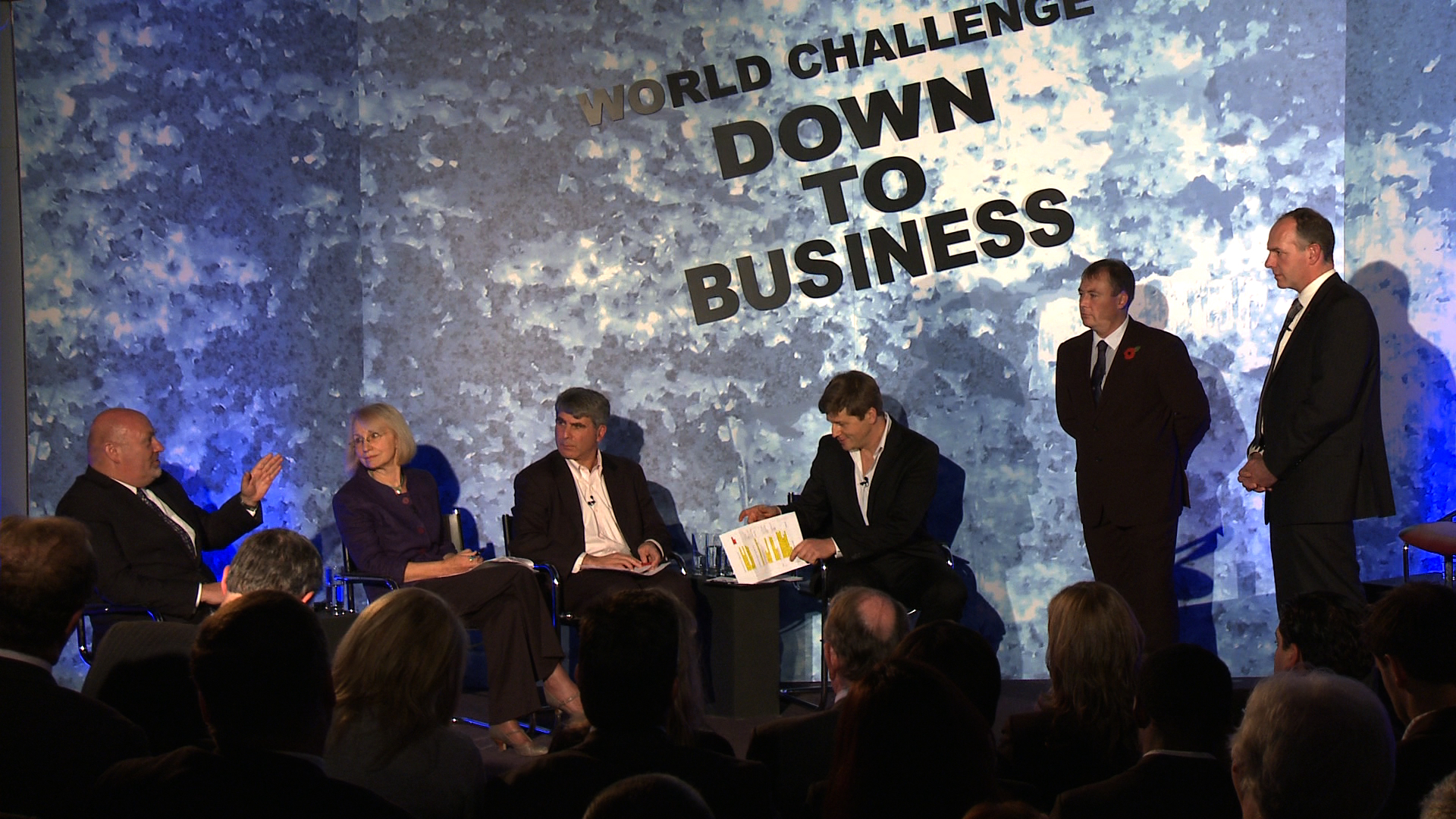
And then I realise the stakes are high. This panel has seen a lot of deals. There aren't many weak spots in a business that are going to get past them. There's every possibility, if they really tell it like they see it, that all four will take some body blows. There's the potential that not one of these four entrepreneurs, each one of whom has committed their lives, their fortunes, and their family time to their project, is going to go away endorsed as a viable business. Tough for them. And tough for those that hold on to the hope that social enterprise is not a form of greenwash but a scalable form of business.
7.08 pm: Finally in the green room. Running through my lines with Gus, who has just explained to me something I had not fully taken on board. There are six different "pieces to camera" -intros, welcome backs and wrap-ups - that will be needed for the final TV show. I have to get these right. Crisp. And first time, because it will be in front of 200 people, all honoured guests, etc. I have zoned out. Playing in my head are the reassuring words of the Director (Rob Finigan) the first time I ever did a BBC World programme, "Leo, I hope you never learn how to do a piece to camera."
7.15 pm: The trailer plays, Andrew Haigh welcomes all and calls me onto the stage. As I get on the carp are right in front of me, bathed in light. And I realise where I have seem them before. They are the man-eating piranhas from the man-eating piranha tanks in which many minor characters in Bond movies meet their end. Except they are bigger.
And that's all for this blog. If you want to know what happened, watch the show, screening on BBC World on November 26th and 27th. And vote now, if you haven't already, for the next round of extraordinary entrepreneurs at www.worldchallenge.co.uk!
Blog
Thu, 08 Dec 2011 11:34
Lara Koritzke is Head of Communications and Development at the ISEAL Alliance, an umbrella organisation that provides certification for quality standards such as Fairtrade and the Forest Stewardship Council. How can consumers know which labels to trust when trying to buy ethically?
Mon, 28 Nov 2011 09:44
10 days after the finish of Global Entrepreneurship Week we hear from organiser Jonathan Ortmans about how the event went. He sees positive signs that around the world informal networks of start-ups are using the market to bring their ideas to life.
Fri, 25 Nov 2011 12:10
This weekend sees the broadcast of the final episode of the Down to Business series. After a year spent guiding the four projects, Leo reflects on the series and what he has learnt along the way. In these times of economic uncertainty he sees projects such as Husk Power Systems as offering a glimmer of optimism that social enterprise can offer solutions to seemingly intractable problems in society.
Follow us